


Pilgrim Visits: Canterbury Cathedral

First Stop: Canterbury Cathedral
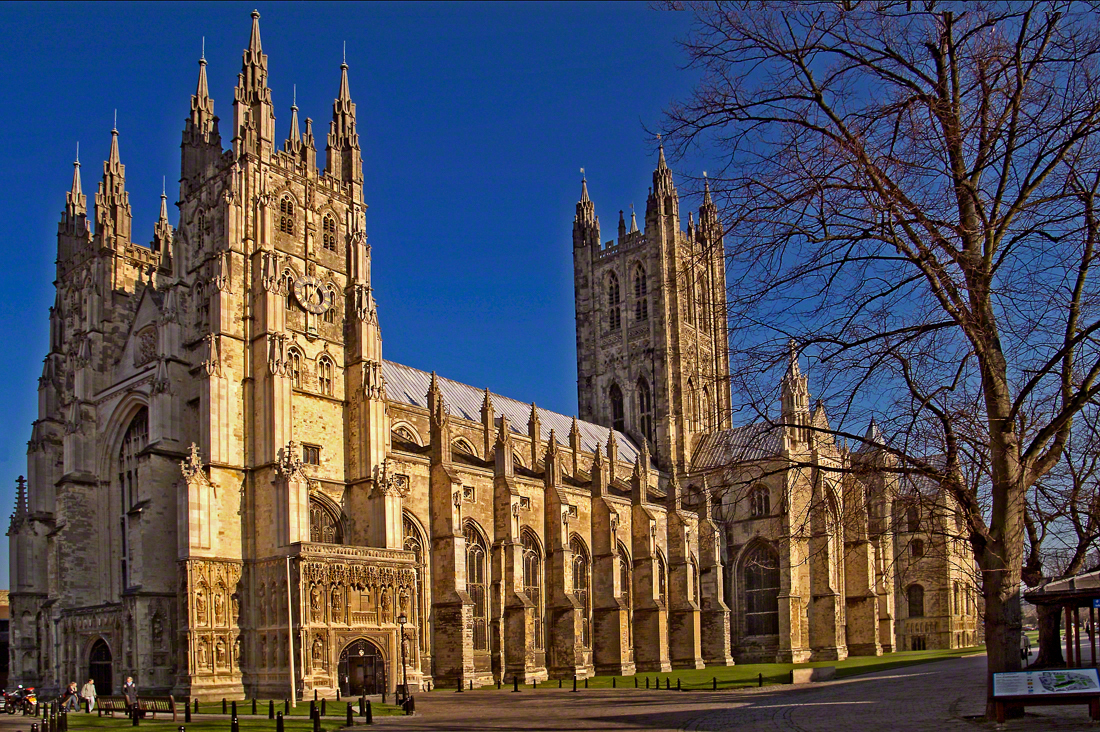
Canterbury Cathedral is one of the most beautiful places to visit for prayer and peace – we highly recommend a visit if you are in Faversham. Please do let the Cathedral know that you were at the Shrine of Saint Jude – and they will let you in as pilgrims. I always think it very surprising (but often very true), how peaceful cathedrals are – and they serve as a great opportunity to be proud of our Christian heritage.
The city is easily reached from Faversham – either by train, bus or car – or like I did once upon a time – you can walk. It is the closest city to Faversham and the grandest. For many centuries, Faversham was part of a pilgrimage route to Canterbury – and many a king passed through our special town on their way to Canterbury.
The city is a popular tourist destination: consistently one of the most-visited cities in the United Kingdom.
(Fr. Wilfrid McGreal, O.Carm – Prior at Faversham was a student at the University of Kent, Canterbury, as was I!).
A City Steeped in History
Canterbury has been occupied since Palaeolithic (Old Stone Age) times and served as the capital of the Celtic Cantiaci and Jute Kingdom of Kent. Many historical structures fill the area, including a city wall founded in Roman times and rebuilt in the 14th century, the ruins of St Augustine’s Abbey and a Norman castle, and the oldest extant school in the world, the King’s School.
Founded in 597, Canterbury Cathedral underwent a complete rebuild from 1070 to 1077. The east end was greatly enlarged at the beginning of the twelfth century, and largely rebuilt in the Gothic style following a fire in 1174, with significant eastward extensions to accommodate the flow of pilgrims visiting the shrine of Saint Thomas Becket, the archbishop who was murdered in the cathedral in 1170.
Modern additions include the Marlowe Theatre and the St Lawrence Ground, home of the Kent County Cricket Club. There is also a substantial student population
The Martyrdom of St Thomas Becket
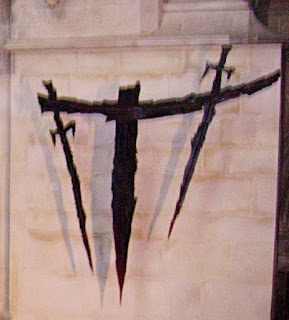
This was a pivotal moment in the history of the cathedral, when the archbishop, St Thomas Becket, was murdered in the north-west transept (also known as the Martyrdom) on Tuesday, 29 December 1170, by knights of King Henry II. After his martyrdom, pilgrims flocked from miles around to visit the Shrine of St Thomas Becket – including King Henry II. Fictional pilgrims are portrayed in Geoffrey Chaucer’s Canterbury Tales.
Unfortunately, the shrine was destroyed in 1538, during the Dissolution of the Monasteries, on orders from King Henry VIII. The king also ordered that Becket’s bones were to be destroyed, and ordered that all mention of Becket’s name be obliterated.
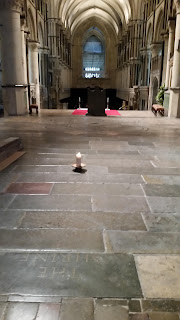
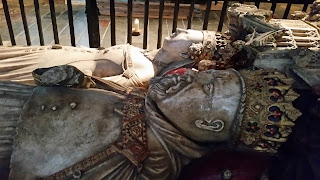
Nevertheless, and fortunately, King Henry VIII failed to obliterate his name or interest in St Thomas Becket. As such, for the modern day visitor, it is possible to visit a candle which marks the place St Thomas Becket’s shrine was situated (with some stunning windows behind). Surrounding the Shrine is the tomb of King Henry IV and his wife; and the Black Prince.
It is also possible to visit a modern sculpture marking the spot of St Thomas Becket’s martyrdom. It was installed in 1986, and the dramatic sculpture represents four swords for the four knights (two metal swords with reddened tips and their two shadows). The design is the work of Giles Blomfield of Truro.
Before the sculpture was installed, Saint Pope John Paul II knelt and prayed with the Archbishop of Canterbury in 1982.
Other Sites Within the Cathedral
In addition to places associated with Saint Thomas Beckett, the visitor can see the tombs of King Henry IV of England; the great medieval hero, the Black Prince; and various tombs of some Archbishop’s of Canterbury – plus much more. As a small aside: King Henry IV’s son, King Henry V had two Carmelite friars as confessors during his reign: Stephen Patrington and Thomas Netter.
King Henry IV and Queen Joan of Navarre (through the bars, you can see the candle for St Thomas Becket)
Let us pray (taken from the Roman Missal):
O God, for the sake of whose Church the glorious Bishop Thomas fell by the sword of ungodly men: grant, we beseech Thee, that all who implore his aid, may obtain the good fruit of his petition. Through our Lord Jesus Christ, Who livest and reignest with Thee in the unity of the Holy Spirit, forever and ever. Amen.
Matt Betts, Shrine of Saint Jude